NK Consultancy Services
NK Consultancy Services
ISO Management Systems, Information Security, Data Privacy, Audits & Process Excellence — Training & Implementation Support.
Explore our Consulting & Training Solutions tailored to your business needs in the following domains.
ISO 42001 AI Management System, ISO 9001 QMS, ISO 27001 ISMS, ISO 27701 PIMS, PCI DSS, HIPAA etc.
GDPR, DPDPA 23, CCPA, Data Privacy : System, Policies, SOPs Development & Deployment Assistance.
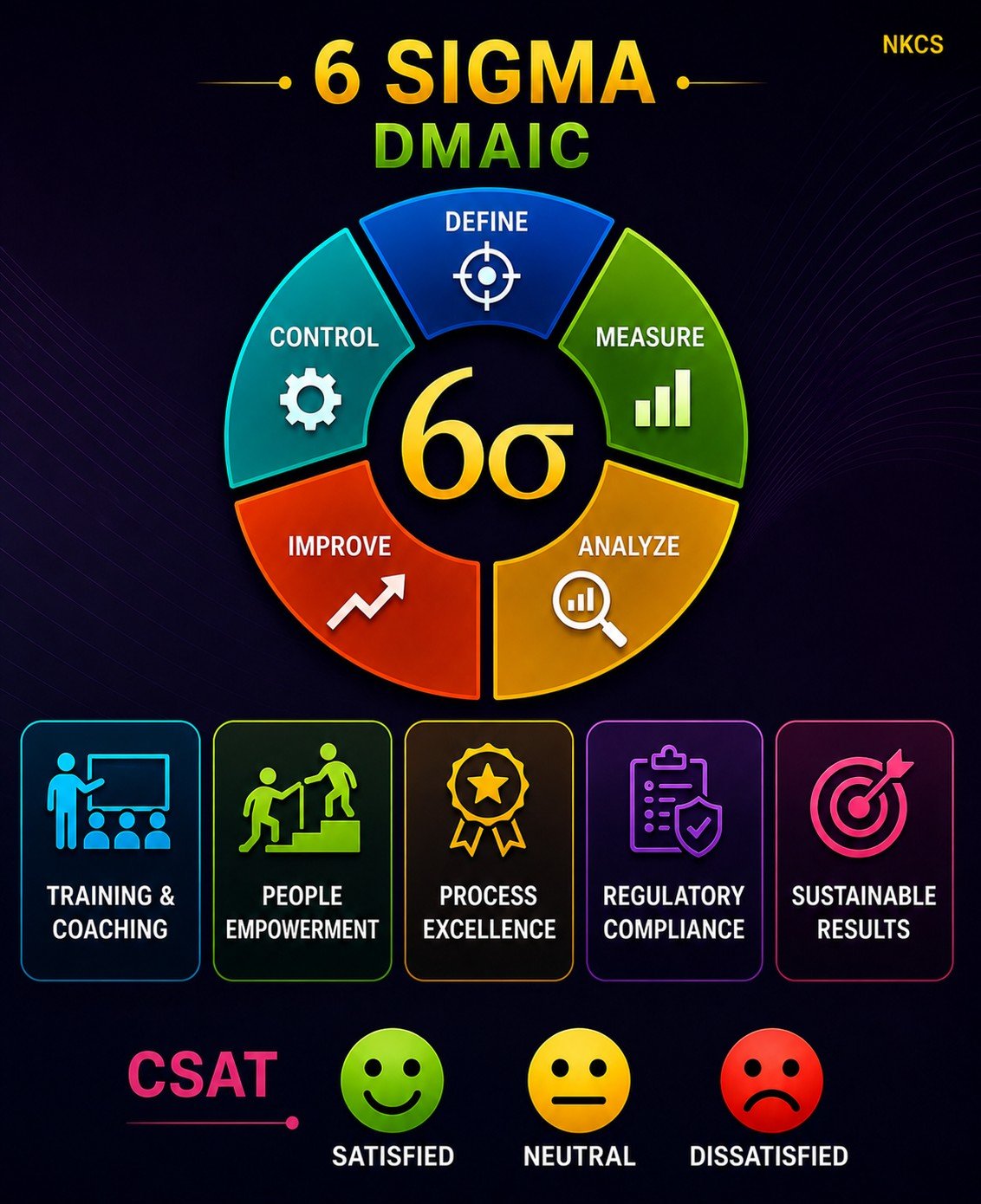
Business/Process Metrics Improvement projects (any metric including Sales Leads), CSAT Improvement Projects, Execution Excellence, Innovation, Business Process Reengineering etc.
Systems Alignment to fulfill the requirements of various Acts and Regulatory Requirements in AI and Information Security domains.
Support in establishing core Business functions, Scalable Systems, Contracts Review, Operations Setup, Process Optimization, Business Transformation.
Assistance in Skill Development Programs, Customzed Training Programs, Conducting Audits to improve systems and Assistance in performing due-deligence.
NK Consultancy Services (NKCS) is a newly established, a mini consultancy firm based at Chennai in India founded in mid 2025-26 to help Small to Medium sized Businesses with the Service offerings mentioned above and in Services page of this website as well. Our business model is hybrid – primarily remote/online considering flexibility and agility with selective onsite support based on needs.
Located in Chennai in India.
Led by a Certified and Experienced Professional serving as Chief Consultant, with over three decades of Expertise in Process Excellence, Corporate Quality, Information Security, and Data Privacy – and with demonstrated success across multiple domains through functional leadership roles at Premier Organizations such as Wipro Consumer Care & Lighting, Sutherland Global Services, and Alldigi Technologies (formerly Allsec).
NKCS brings-in Proven Capability in delivering Value-driven Solutions.
NKCS can contribute to your Success! Give it a Try!
(NK Consultancy Services, NKCS, and the NKCS Logo are the trademarks of NK Consultancy Services, with Trademark applications duly filed.)

Data Privacy — No Longer Optional
Across the globe, numerous regions and countries, including India, have introduced comprehensive data privacy laws, many of which are already in effect. Prominent examples include the European Union’s General Data Protection Regulation (GDPR) and India’s Digital Personal Data Protection Act, 2023 (DPDPA 23).
It is imperative for Organizations that collect or process personal data — whether of employees, clients, or consumers — to assess which privacy laws apply to their operations and implement effective compliance measures. Doing so helps ensure adherence to legal obligations while minimizing the risk of significant financial penalties and potential loss of business.
While the GDPR has been fully enforced for several years, the Government of India formally notified the Digital Personal Data Protection Rules, 2025, to operationalize the DPDPA 23. The rules introduce phased implementation timelines, with certain regulatory and ecosystem-enabling provisions becoming effective earlier, while key operational compliance obligations for Organizations are scheduled to become applicable from 13 May 2027.
To comply with these requirements, Organizations must establish a robust governance framework. This includes identifying lawful grounds for processing personal data, obtaining valid consent where applicable, issuing privacy notices, upholding the rights of Data Principals, and implementing mechanisms to promptly report personal data breaches, among other requirements.
In today’s digital landscape, data privacy has evolved into a critical business responsibility — leaving no room for compromise or complacency.
While there is still time before key operational provisions under the DPDPA 23 framework become applicable in India, Organizations that delay preparation may face significant gaps when required to demonstrate compliance. Establishing governance frameworks and embedding privacy practices across business processes require careful planning, time and sustained effort. Early preparation enables Organizations to address compliance requirements in a structured manner; otherwise, they may find themselves inadequately prepared to demonstrate compliance once the regulatory requirements become applicable.
Organizations seeking professional guidance in establishing a robust data privacy framework aligned with the Digital Personal Data Protection Act, 2023, GDPR, or other applicable data protection laws may consider engaging NK Consultancy Services (NKCS). NKCS can support Organizations in designing and deploying comprehensive, customized, and practical end-to-end privacy governance frameworks. The firm can also provide specific assistance such as privacy training programs or the development of policies and procedures tailored to specific organizational needs.
Shaping Responsible AI Management System — Guided by ISO 42001:2023 & Associated Standards
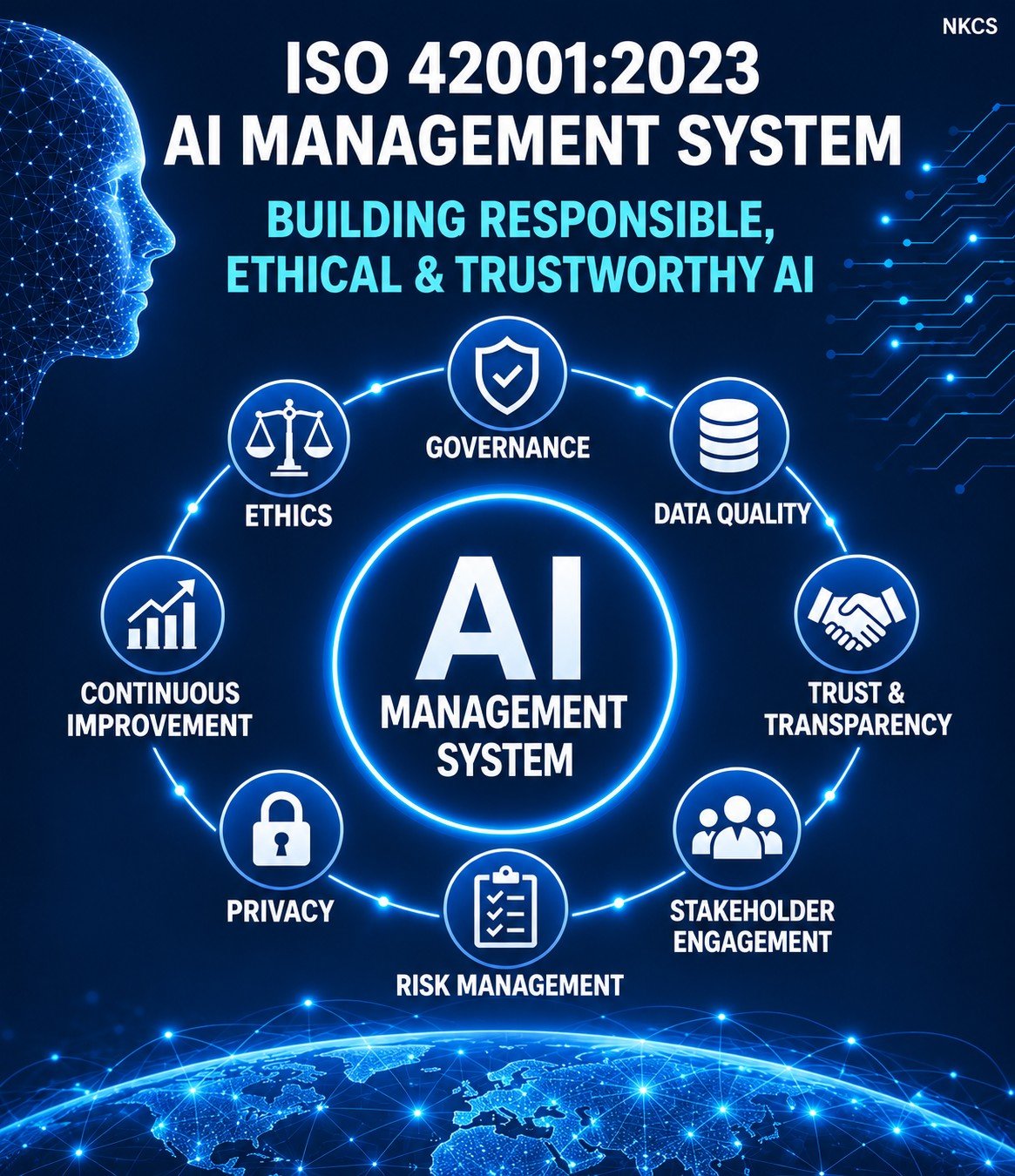
Harnessing the power of Artificial Intelligence requires more than just Technology.
AI success depends on governance, data quality, ethics, trust, and transparency, and must be evaluated for risks and business impacts to all stakeholders — including society — with appropriate mitigation measures, as much as it depends on innovation and core development.
The ISO 42001:2023 standard provides a robust AI Management System framework that enables organizations to build transparent, fair, and privacy-focused AI systems, ensuring that the needs and expectations of all stakeholders — including regulatory obligations — are effectively addressed.
ISO 42001 does not stand alone — it is supported by several associated ISO standards that collectively strengthen the governance, ethical, and operational dimensions of AI management systems.
By adopting this framework with well-defined policies, procedures, and deployment practices, organizations can ensure their AI strategies and projects remain ethical, bias-free, transparent, accountable, risk-mitigated, and success-ready. As a result, the scope for AI misuse, regulatory lapses, consumer complaints, and project failures will be significantly reduced.
NK Consultancy Services (NKCS) can assist your organization with training and implementing a healthy AI Management System in alignment with ISO 42001:2023 and its associated standards.
NKCS | Solutions that drive Excellence
Contact Information:
For enquiries, service requirements, business opportunities, or information about our complimentary webinars, please write to us at the email address below. We will connect with you at the earliest. Thank you.
